AI-Powered Financial Reconciliation Platform
Project Overview
Design of an AI-driven platform to optimize financial reconciliation and payment dispersion processes. The project combined AI adoption workshops, process analysis, and product design to transform manual operations into an automated and scalable system.
ROLE
AI Product Designer
CLIENT
Colombian Bank
DURATION
1 months
RESPONSABILITIES
Workshops, UX research, Product designer
TEAM
AI Product Designer, AI Engineer
Problem
The financial team relied on manual reconciliation processes using large Excel files, leading to inefficiencies, system slowdowns, and high risk of human error. Additionally, the lack of structured workflows and low AI adoption limited opportunities for automation and scalability.
Objectives
Identify opportunities for AI and automation
Reduce manual workload in reconciliation processes
Improve data validation and accuracy
Enable users to focus on analysis rather than execution
As a AI Product Designer, I was responsible for:
Led the end-to-end process from discovery to solution design.
Led workshops, gathering requirements, mapping processes (As-Is / To-Be),
Acted as a bridge between stakeholders and technical teams, ensuring alignment and feasibility.
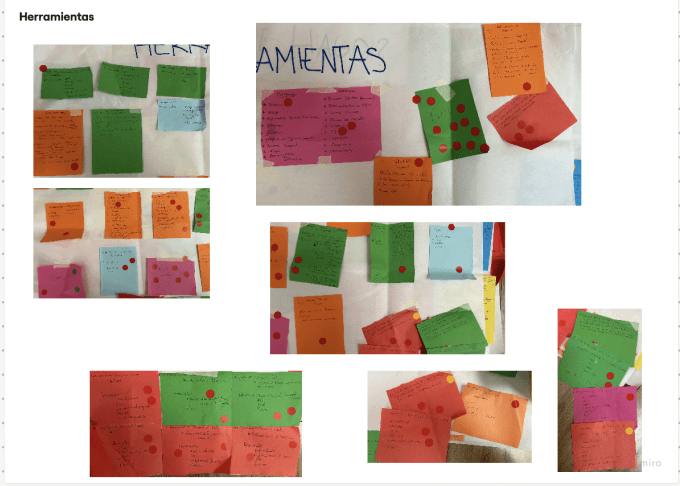
The process involved multiple manual steps, including data collection, reconciliation, validation, and payment execution. Through workshops and analysis, I mapped the full operational flow, identifying dependencies, bottlenecks, and repetitive tasks. This allowed a clear understanding of where automation and AI could generate the most impact.
Research & Requirements

Process Mapping
Information Architecture

Design Solution
A centralized platform was designed to automate data validation and streamline reconciliation workflows. The solution reduces reliance on Excel, structures the process into clear steps, and provides better visibility of financial operations. This transforms the user role from manual executor to decision-maker.
Data & Automation
The platform integrates automated validation rules to reduce errors and improve efficiency. By structuring data inputs and eliminating manual handling, the system increases processing speed, accuracy, and scalability.
Collaboration
The project was developed in close collaboration with financial teams and stakeholders through workshops and iterative sessions. This ensured alignment with real user needs and validated the solution from both business and operational perspectives.